
Foreign investors continue to pull back money from the Indian equity market withdrawing a little over Rs 30,000 crore in the first fortnight of the month amid escalation in global trade tensions. This came following an outflow of Rs 34,574 crore from equities in February and Rs 78,027 crore in January.

Among the 30 Sensex firms, ICICI Bank, State Bank of India, Axis Bank, Mahindra & Mahindra, Infosys, Larsen & Toubro, Tata Steel, Tata Consultancy Services, Bajaj Finance and Adani Ports were the major laggards. Asian Paints, Hindustan Unilever, UltraTech Cement, Sun Pharma and Reliance Industries were among the gainers.

India's job market is witnessing high mobility with a significant percentage of professionals actively seeking new roles, many are now negotiating for better pay within their current organisations, says a survey. The latest Talent Trends India 2025 report by Michael Page reveals that 62 per cent of professionals have negotiated a raise this year, and 37 per cent succeeded -- signalling a shift toward internal advancement.

From the 30 Sensex firms, NTPC, Nestle, Titan, Kotak Mahindra Bank, Maruti, Hindustan Unilever, Bharti Airtel and HDFC Bank were the biggest gainers. HCL Technologies, Tata Consultancy Services, Adani Ports, Larsen & Toubro, JSW Steel, State Bank of India, Tech Mahindra and Bajaj Finance were among the laggards from the pack.

Equity investors will track the trading activity of foreign investors, global trends and ongoing earnings results for further cues, and benchmark indices may continue to witness consolidation in a holiday-shortened week amid the monthly derivatives expiry, analysts said. Markets fell sharply last week amid massive foreign capital outflows and dismal Q2 earnings so far. Weakness in the markets might continue in the near term amid cautiousness among investors ahead of the US presidential election early next month, an expert said.

'We are looking at what kind of products, diagnostics or other solutions we can offer to become a well-rounded player in a particular disease area globally.'

Computer science has been an evergreen choice among engineering aspirants. However, with the rise in AI, students are increasingly realising the potential of automation and robotics.

India's largest drug maker Sun Pharmaceutical on Thursday posted a decline of 19 per cent year-on-year (Y-o-Y) for its consolidated net profit for the fourth quarter of the financial year 2025 (Q4FY25) at Rs 2,149.8 crore. Meanwhile, its revenue from operations rose by 8 per cent at Rs 12,958.8 crore.

Investors would track a host of macroeconomic data announcements scheduled this week, including inflation numbers, and also monitor global market trends, and trading activity of foreign institutional investors, analysts said. The ongoing quarterly earnings announcements and the rupee-dollar trend would also influence the markets.

By choosing your study destination carefully, leveraging government schemes, comparing loan options, and adopting frugal living practices, Indian students can acquire global credentials without mortgaging their futures.

State Bank of India, Tech Mahindra, Larsen & Toubro, Tata Steel, Sun Pharma, Infosys, HCL Tech, Axis Bank, Tata Consultancy Services and NTPC were among the biggest laggards among Sensex shares. Nestle, Hindustan Unilever, Titan, Power Grid, UltraTech Cement and ITC were among the gainers.

'We believe that in the new world order FTAs or bilateral trade agreements (BTAs) are the way forward.' 'They are enablers for our participation in global value chains. Today, around 70 per cent of global trade is tied to these chains.'

From the Sensex firms, Tata Steel, Eternal, Tech Mahindra, Maruti, Mahindra & Mahindra, Infosys, IndusInd Bank, HCL Tech, Tata Consultancy Services and Bharti Airtel were the major gainers. Telecom operator Bharti Airtel climbed nearly 1 per cent after it posted about a five-fold jump in consolidated net profit to Rs 11,022 crore in the March 2025 quarter, mainly due to the tariff hike impact and one-time gain on tax benefits. However, Asian Paints, Tata Motors, Kotak Mahindra Bank, NTPC and Power Grid were among the laggards.

From the 30-share pack, Bajaj Finserv, Mahindra & Mahindra, Eternal, Power Grid, ITC, Tata Motors, Asian Paints and Hindustan Unilever were among the gainers. Among the laggards, Kotak Mahindra Bank tanked 4.57 per cent

55% Indians fear that their skills could become partially or fully obsolete within the next five years.

Professionals will be required to either learn new tech skills that focus on AI, cloud computing, or risk becoming obsolete, says Arun Prakash M.

Benchmark Sensex rose by nearly 91 points to close at a fresh lifetime high while Nifty settled above the 25,400 level for the first time supported by firm global trends ahead of the much-awaited US Fed's decision on interest rates. Extending its record-setting spree for the second day, the 30-share BSE Sensex climbed 90.88 points or 0.11 per cent to settle at a lifetime high of 83,079.66. During the day, it rose by 163.63 points or 0.19 per cent to 83,152.41.

Qcom alone is expected to account for a 60 per cent surge in gig hiring, adding 1.5 million to 2 million roles.

'While investors believe in India's long-term growth story and resilience amid global uncertainty, they see near-term risks around the direction of a global trade war.'

Bajaj Finance, IndusInd Bank, State Bank of India, Maruti, Tata Motors, ITC, Tata Steel and Reliance Industries were also among the gainers. Nestle, NTPC, Kotak Mahindra Bank, Power Grid and Titan were among the laggards.

The domestic stock market this week would monitor the geopolitical developments after India and Pakistan reached an understanding to stop military actions, analysts said. Moreover, macroeconomic data announcements, Q4 earnings, trading activity of foreign investors and global market trends are also likely to influence sentiments, traders said.

Macroeconomic data announcements, the last batch of Q1 earnings and global trends are the major factors that would influence trading sentiments in the equity market in a holiday-shortened week ahead, analysts said. Besides, trading activity of foreign investors would also be a crucial factor in dictating movement in the market. Equity markets would remain closed on Thursday for Independence Day.
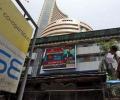
From the Sensex pack, Tata Motors, Sun Pharmaceutical, Bharti Airtel, Bajaj Finserv, ICICI Bank, Mahindra & Mahindra and JSW Steel were the gainers. Tech Mahindra, HCL Technologies, Asian Paints, Titan, Infosys, State Bank of India, Tata Consultancy Services and HDFC Bank were the laggards.
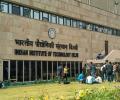
The eight-month intensive programme is designed to help professionals develop comprehensive expertise across both data science and decision science, said IIT-Delhi.

With the earnings season drawing to a close, stock markets will take cues from global trends and foreign investors' trading activity this week, analysts said. The US FOMC (Federal Open Market Committee) minutes will be the major highlight this week, experts said. "This week, there are fewer cues on the macro and micro fronts, as the Q1 earnings season has concluded.

India's hospitality sector is rolling out the red carpet for investors. A flurry of upcoming IPOs, or initial public offerings, the entry of new players, and ambitious expansion plans by Indian and global hotel brands are ushering in what could be the industry's most formalised era yet. Leading the charge are real estate titans, who are turning their hotel arms into global hospitality chains.
From the Sensex firms, Mahindra & Mahindra, HCL Tech, Tata Motors, Nestle, ITC, Hindustan Unilever, Larsen & Toubro, and Tech Mahindra were the biggest gainers. In contrast, Eternal, UltraTech Cement, Power Grid, Tata Steel and Kotak Mahindra Bank were among the laggards. Eternal dropped 4.51 per cent.

The exodus of FPIs from the Indian equity markets continued unabated, as they withdrew over Rs 7,300 crore (about $840 million) in the first week of this month due to global trade tensions, with the US imposing tariffs on countries such as Canada, Mexico, and China. This came following an outflow of Rs 78,027 crore in the entire January. Before that, they invested Rs 15,446 crore in December, data with the depositories showed.

India's military expenditure in 2024 was nearly nine times that of Pakistan's, according to a study released by the Stockholm International Peace Research Institute (SIPRI). India's spending reached USD 86.1 billion, while Pakistan spent USD 10.2 billion. China's military spending continued to rise, reaching USD 314 billion, accounting for 50% of all spending in Asia and Oceania.

Tata Steel and Tata Motors dropped over 10 per cent each. Larsen & Toubro, HCL Technologies, Adani Ports, Tech Mahindra, Infosys, Tata Consultancy Services, Reliance Industries and Mahindra & Mahindra were the other big laggards.

Factors that cause severe distress include early smartphone usage, consumption of ultra-processed foods, exposure to environmental toxins, and a growing sense of loneliness.

'When India opened its doors to the world, moving away from an agrarian to a market economy, everything, whether life or love, was commodified.'

The interplay between domestic and foreign capital will shape India's equity markets.

Kirmani lauded Kohli not just for his accomplishments on the field but also for the inspiration he provided to the next generation of cricketers.

Bharti Airtel, ICICI Bank, Eternal, Mahindra & Mahindra, HCL Technologies, HDFC Bank, Kotak Mahindra Bank, Tata Consultancy Services and Bajaj Finance were also among the laggards.

'India is a very strategic geography. The business is growing over 37-38 per cent year-on-year.'

The restaurant chains are riding the Hallyu wave -- a phenomenon about the growing global prominence of South Korean pop culture.

Mr Trump's actions, because of their extreme nature and the dangerous rhetoric that accompanies them, receive the most attention, points out Mihir S Sharma.

A new study by IIT-Kharagpur warns that ozone pollution could significantly reduce agricultural yields in India, particularly impacting wheat, rice, and maize production. The study, published in the journal 'Environmental Research', highlights the vulnerability of major food crops to rising surface ozone levels, especially in the Indo-Gangetic Plain and Central India. The researchers call for effective emission reduction strategies to mitigate these risks and ensure global food security.

New investor additions by mutual funds (MFs) have slowed dramatically in recent months, indicating that market correction and a rise in volatility are somewhat dimming the appeal of equity schemes. MFs have onboarded 300,000 new investors in April 2025, the lowest in 22 months.
